Designing efficient and safe workstations: a practical guide to choosing industrial cranes
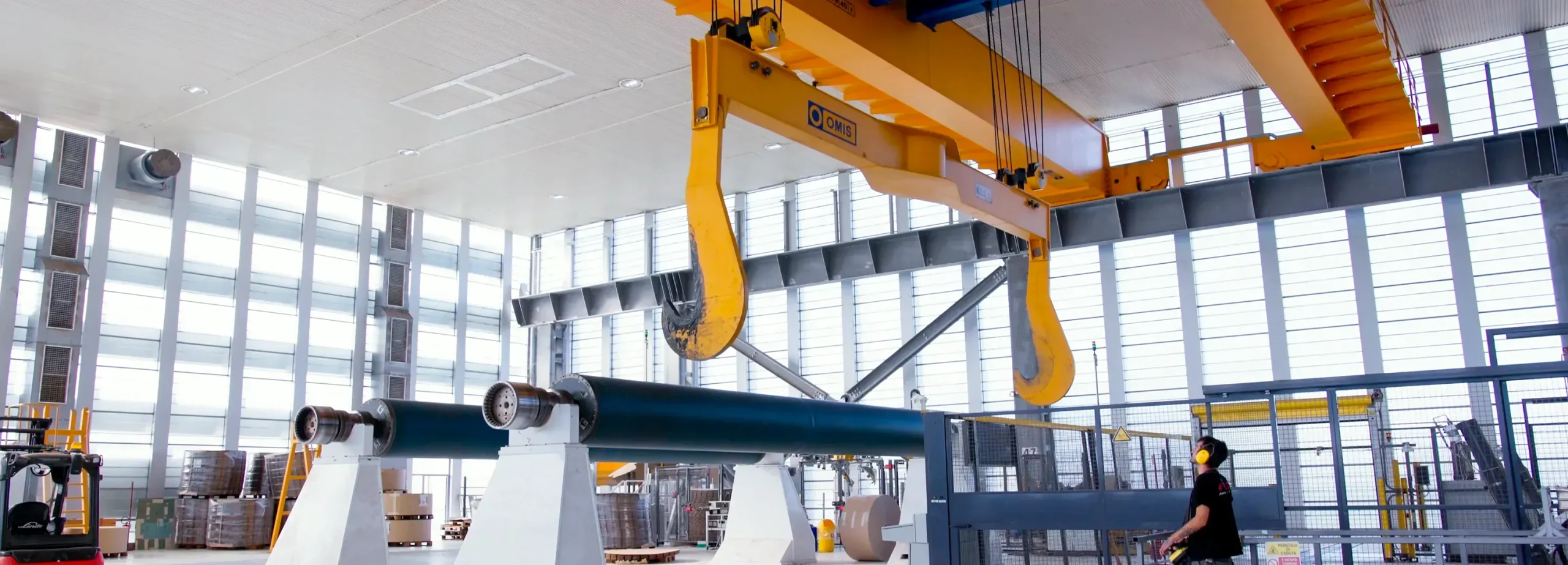
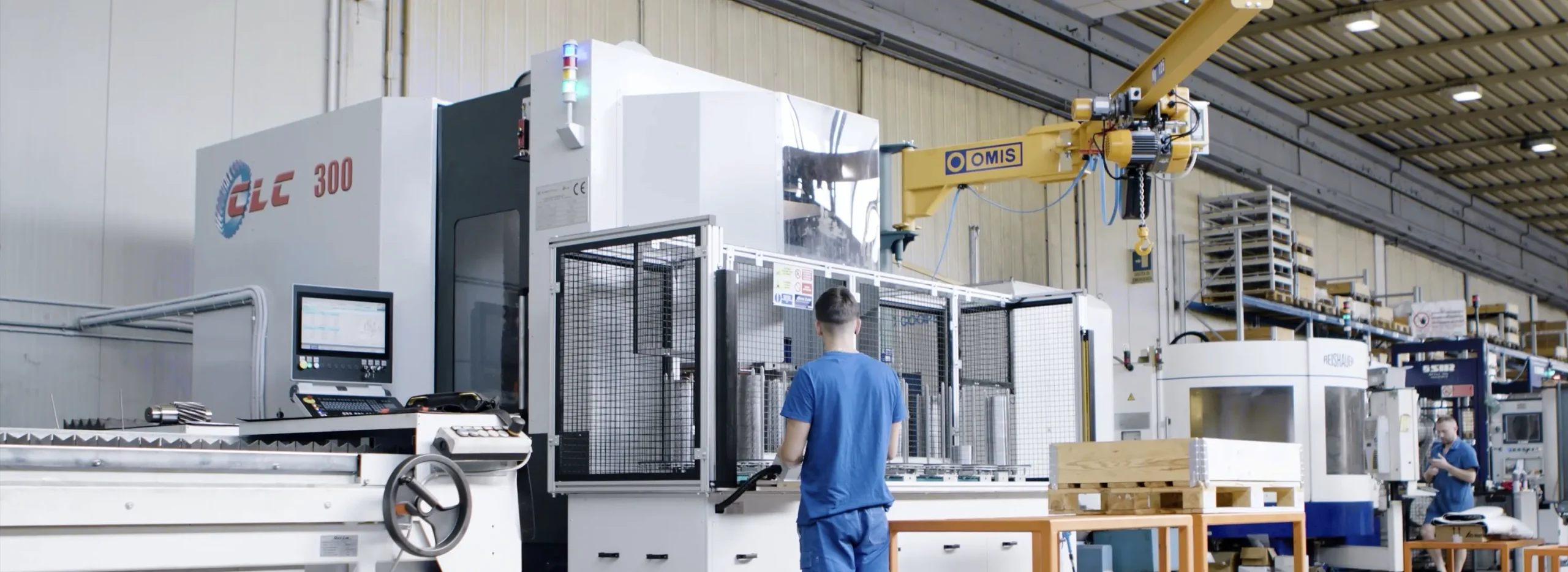
In modern factory settings, the design of workstations is no longer just a matter of space arrangement, but a strategic lever to increase productivity, safety and ergonomics. Whereas in the past load handling was tied to strict layouts and manual effort, today OMIS lightweight lifting systems have become true collaborative solutions, capable of supporting the operator like an “extra arm”. Whether we are thinking of a small workshop or a large assembly line, the goal is always the same: remove the need for dangerous manual lifting, reduce injuries and make every workplace a smooth, safe and highly productive ecosystem. Continue reading to find out how to design efficient and safe workstations.
The strategic role of the crane workstation in production processes
The modern workstation is not an isolated element, but the beating heart on which manufacturing efficiency depends. The correct integration of a lifting system entails a shift from passive load handling to active management of the production flow: every movement becomes part of a coordinated and measurable process designed to eliminate all types of waste. To fully understand the value of this integration, it is helpful to examine how the role of the crane in the industrial workstation has evolved, what tangible benefits it brings to both the operator and the business, and how it directly affects cycle times and overall productivity.
Evolution of industrial workstations, between ergonomics and automation
In recent decades, the approach to workstation design has changed dramatically. Between the 1960s and 1980s, handling systems were predominantly rigid, mechanical, and designed for fixed layouts: handling was slow, ergonomics almost absent and the physical effort required of operators was high. The crane was a “steel giant” only used for sporadic large-scale movements. In modern industry, thanks to the introduction of modular structures, inverters and electronic controls, the crane has become an active part of the production process: integrated into the layout, aligned with the pace of the activities, and capable of progressive and fluid movements. The result is a workstation with a lifting system that combines safety, precision and efficiency in one scalable solution.
Why integrate lifting systems into workstations
At OMIS, we have shaped a fundamental concept: the crane is no longer just a simple means of moving loads from point A to point B, but a strategic tool for organising the workstation. Integrating a dedicated lifting system makes it possible to:
- Dramatically reduce physical exertion, preventing strain injuries and chronic fatigue.
- Increase precision and control, thanks to ultra-precise movements made possible by inverter technology.
- Guarantee safety and business continuity, by eliminating delays due to the sharing of equipment.
- Support the operator by acting as a true “extra arm”, autonomous and always available.
- Reduce errors and risks through controlled and progressive movements.
These benefits are not simple theories: they have a direct and measurable impact on production line performance, as we will see when examining technical parameters and OMIS real case studies.
Impact on productivity, safety and cycle time reduction
Modern industry requires smooth and continuous handling, reconfigurable layouts, reduced manoeuvring errors, a drastic reduction in accidents and an increase in units processed per shift. To achieve these results, the design of the industrial crane workstation must follow precise technical criteria – which OMIS has developed and refined over more than 55 years of installations.

Designing a crane workstation: basic technical principles
Excellent design comes from a rigorous analysis of the specific needs of the department. It is not just a question of installing a machine, but of designing a system that perfectly fits the operational reality of the workstation, considering loads, movements, space, and frequency of use. Below are the fundamental principles that guide every OMIS project, from load analysis to layout design, from ergonomic assessment to system modularity.
Loads analysis and structural design: the 5 OMIS parameters
Before any installation, at OMIS we assess five essential technical parameters to ensure system efficiency:
- Maximum and average weight: the maximum capacity must cover the peak load, but the system must remain agile for the weights handled daily.
- Lifting frequency: the number of cycles determines the choice between manual or powered solutions.
- Load type: analysis of bulk, fragility, or instability of the material to be moved.
- Motion paths: study of trajectories to avoid interference and optimise time.
- Useful height and accuracy: evaluation of the available vertical space and the degree of positioning accuracy required.
To simplify this process, we apply the OMIS FORMULA:
Required movement + Weight + Coverage area + Frequency = Ideal system type
The application logic is straightforward: a short route requires a local solution (jib crane or compact suspended system); a long route requires wide coverage (monorail crane or lightweight overhead crane).
Manual crane or powered crane: which one to choose?
One of the questions we are most often asked concerns the distinction between a manual and a powered system. The OMIS response is based on two main criteria: the load weight and the required level of accuracy.
| Capacity | Products | Characteristics |
|---|---|---|
| < 500 kg | Pillar jib crane with channel-shaped profile boom, Suspended manual crane, Curved monorail crane, Lightweight overhead crane, Portable gantry crane | Immediate and responsive movements, fast cycles, direct operator control, extremely reduced inertia, limited oscillation control |
| 500 kg – 1000 kg | Pillar jib crane with channel-shaped profile boom, Suspended manual crane, Curved monorail crane, Lightweight overhead crane, Portable gantry crane | Better controlled movements, reduced but present inertia, increasing attention to oscillations |
| 1000 kg – 3200 kg | Pillar jib crane with channel-shaped profile boom, Suspended electric crane, Curved monorail crane, Lightweight overhead crane | Progressive acceleration, speed fine tuning, robust structures |
| 3200 Kg - 5 t | Pillar jib crane with channel-shaped profile boom, Suspended electric crane, Curved monorail crane, Lightweight overhead crane | Highly controlled movements, highly sized structures, critical braking |
Precision and cycle time
The manual solution is suitable for loads under one tonne and high-frequency cycles. The powered solution becomes necessary above one tonne, when weight makes manual control ineffective, and in contexts requiring extremely high-precision positioning. The weight of the load remains the real deciding factor in the choice: there is no threshold of hourly cycles beyond which a manual system automatically becomes inefficient.
Ergonomics and reduced physical exertion of the operator
The main objective of every OMIS industrial crane workstation is to enhance the well-being of its daily users. Integrating an ergonomic workstation with a lifting system requires tangible actions on several fronts:
- Elimination of hazardous manual lifting: drastically reducing the risk of injuries and musculoskeletal disorders.
- Smooth and controlled handling: thanks to the use of inverters, the load moves without jerks, safeguarding both the operator and the integrity of the product.
- Reduction of awkward postures: the system supports the weight, eliminating torso twisting and excessive strain.
- Increased operational autonomy: the operator has an “extra arm” that allows safe and independent work management.
Once loads and movements have been defined, the next step is to organise the space in a functional manner, selecting the layout best suited to the production flow.
Optimal layout and handling of flows
The choice of lifting system depends not only on the available space, but also on the dynamics of the internal logistic flows. At OMIS, we distinguish between solutions designed for individual operations and broad-coverage systems engineered to manage the entire process. The geometry of the work area is the starting point for identifying the most efficient configuration:
- Circular area: the jib crane handles loads starting from 125 kg and is the most practical and cost-effective piece of equipment for making a single workstation autonomous, ideal when the operating radius is limited.
- Linear area: the monorail (straight or curved) handles loads starting from 125 kg and is the perfect choice for linking consecutive production stages along predefined paths, ensuring precision and repeatability.
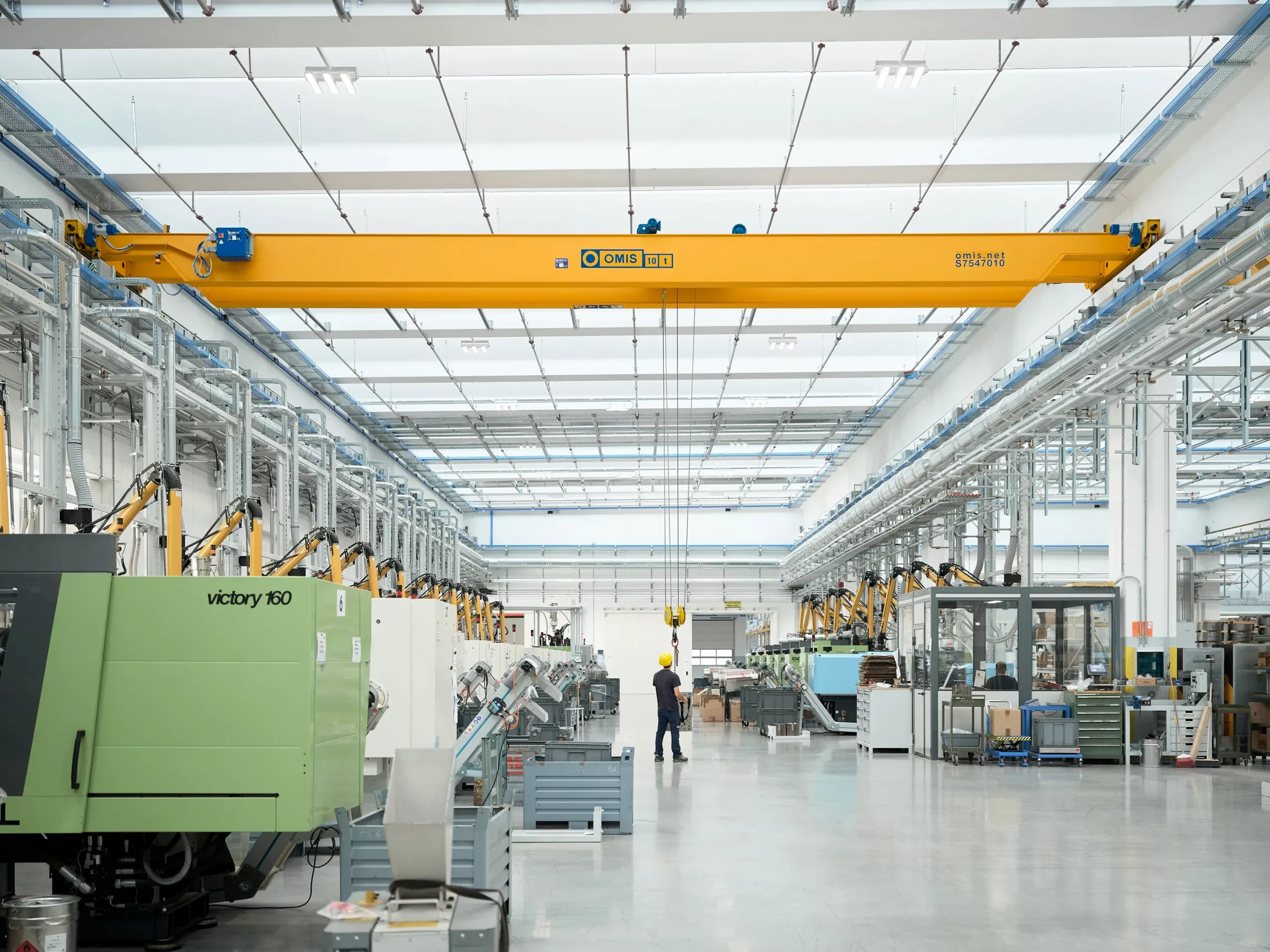
- Multi-station area: when flexible handling over large surfaces is required, suspended systems or lightweight overhead cranes (GAE) – the former starting from 125 kg and the latter from 250 kg – provide full coverage while keeping the floor completely free of obstacles, greatly enhancing safety.
- Mobile or variable positions: the portable gantry cane offers maximum versatility without structural constraints to the floor or ceiling, ideal for maintenance and temporary work.
The larger the work area and the more complex the material flow, the more a structural system capable of integrating machines and work islands in a continuous and uninterrupted process is required.

System modularity, scalability and flexibility
One of the most strategic aspects in the design of a lifting system workstation is the ability of the system to evolve with the company. The OMIS philosophy suggests looking beyond immediate needs, also considering how the operational flow may develop during the course of the next one or two years, evaluating potential changes in volumes and weights or the opening of new lines. OMIS lightweight load handling systems are designed as flexible and reconfigurable solutions. Thanks to the modular structure, it is possible to adapt the workstation without invasive structural interventions. It is technically possible – and often recommended – to size the supporting structure from the very first installation. This approach protects the investment and allows performance to be scaled up over time, switching, for example, from manual to powered handling, to manage more intensive cycles with greater precision. Investing today in a modularly designed industrial crane workstation means ensuring operational flexibility and long-term production continuity.
Assembly line optimisation: a real OMIS case study
Theory becomes productivity: let’s analyse a real-life case study involving a multinational company in Northern Italy operating in the production of industrial machinery, with loads ranging from 125 kg to 3.2 tonnes.
The problem: operational discontinuities and ergonomic risks
Before the involvement of OMIS, the production line exhibited typical non-optimised operation issues: slow manual handling, operational interference between workstations, delays due to the sharing of equipment, high ergonomic risks, and manual systems no longer suited to the required production pace. The lack of positioning precision was becoming an obstacle to the quality of the finished product.
The OMIS solution: a modular layout for every need
We designed a modular layout that combines different technologies to cover each specific workstation requirement:
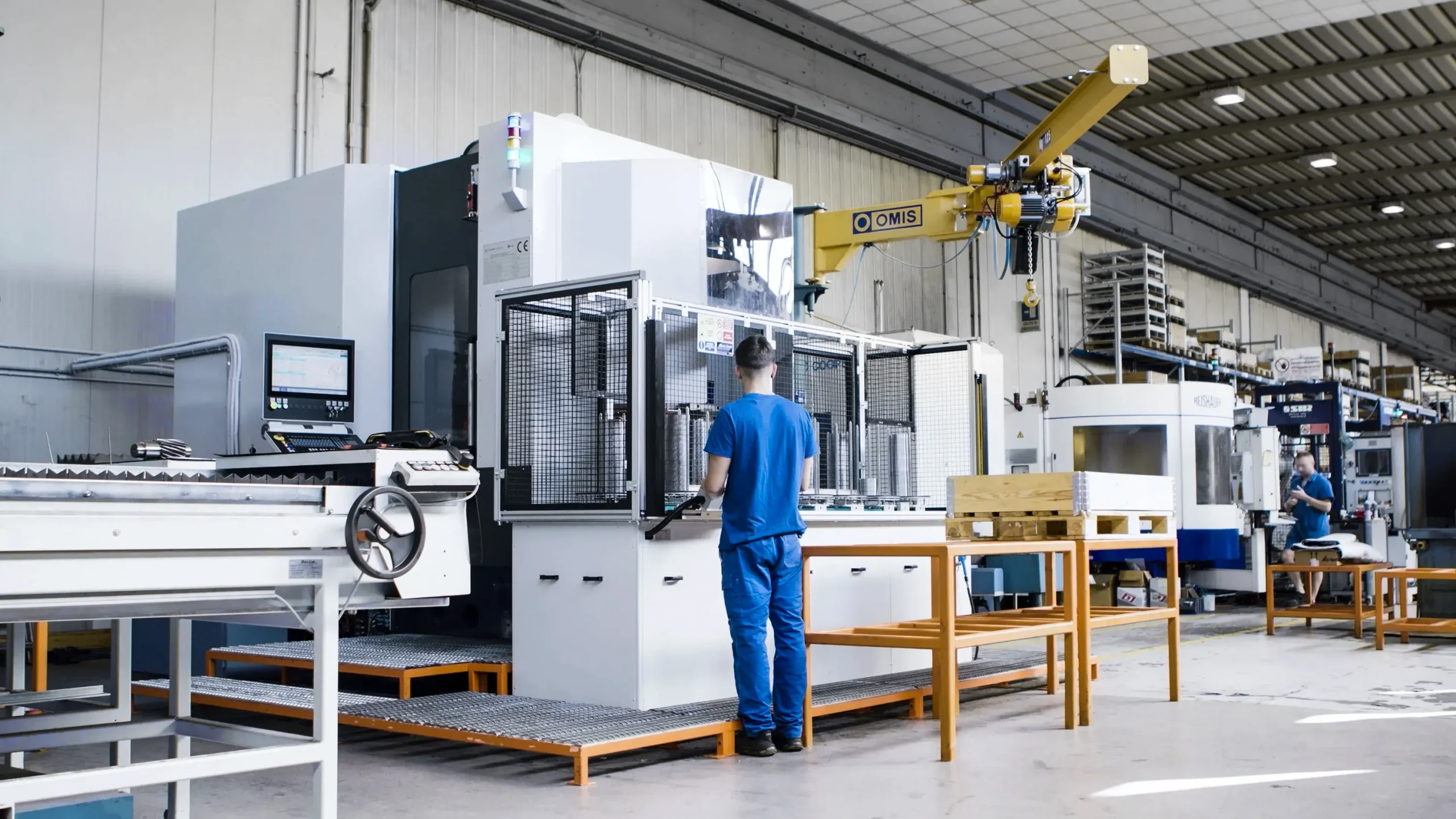
- Jib cranes to make individual work cells autonomous: assembly stations, mounting areas and machining centres.
- Suspended systems and lightweight overhead cranes (GAE) to link consecutive workstations in flow production lines and sequential assemblies, where each station performs an operation and then the product moves on to the next.
- Traditional overhead cranes for handling heavy loads and shipping, covering an entire area or span of the shed.
The result: a forklift is no longer needed, movements become more precise thanks to powered systems, and workstation waiting times are eliminated. The cycle time has been reduced, enabling operators to work more efficiently, with less effort and improved safety.
Other examples of how we made 50 workstations independent? Find out about Nexteel: process innovation through 50 cranes, including jib cranes, portable gantry cranes and overhead cranes
Common errors in the design of workstations with lifting systems
Designing a crane workstation means starting from real flows, not theoretical values. Without an accurate analysis of movements, weights and frequencies, even a well-built system runs the risk of not supporting the required production rhythm. During their inspections, OMIS technicians often encounter four categories of errors.
Structure oversizing
One of the most common mistakes is choosing a system based on the maximum theoretical load, ignoring the weights actually handled daily. The result is a structure that is too heavy, slow and not very ergonomic, which consumes more energy and slows down the operating cycles. For example, installing a 10-tonne overhead crane because the final load weighs 9 tonnes may be inefficient if 80% of daily operations involve light loads.
Structural issues at the Installation Site
A lifting workstation is only efficient if it rests on a solid foundation. Pillars in poor condition, unsuitable flooring or interference with existing installations can compromise safety, precision and crane reach. Assessing the condition of the site is an essential preliminary step.
Inefficient layout and lack of ergonomic analysis
A layout designed without considering the actual movements of the operator leads to incorrect postures, twisting of the torso and unnecessary manual lifting. Furthermore, an “uncovered” workstation, forced to wait for the main overhead crane, generates downtime and loss of productivity.
Neglecting future expansions
A non-modular system quickly becomes obsolete. If future expansions are not considered from the outset, the company ends up with a rigid structure, difficult to adapt to new volumes or new production lines, with modernisation costs often higher than those of a more forward-looking initial design.
If one or more of these issues are present, it means that the workstation is not designed for the actual workflow: an error that impacts costs, safety and productivity. OMIS technicians analyse the practical needs of the company, identify critical issues, and design the most effective solution for the production line.
The OMIS range of lightweight systems for industrial workstations
In order to optimise an industrial crane workstation, it is essential to select the equipment that best suits the geometry of the space and the frequency of the operating cycles. The OMIS range focuses on modular and versatile systems that integrate ergonomics and performance: jib cranes, suspended systems, lightweight overhead cranes (GAE), monorail cranes and lightweight portable gantry canes. Each system meets specific requirements in terms of space and frequency of operation: the table below provides a comparative overview to quickly guide you in your choice. To learn more about the technical specifications of each product, please visit the relevant sections of the OMIS website.
| Solution | Products | Benefits |
|---|---|---|
| Jib cranes | Pillar jib crane with channel-shaped profile boom | Cheap, simple, immediate |
| Suspended systems | Suspended manual crane, Suspended electric crane | Free ground, fluid movements |
| Lightweight overhead crane | Lightweight overhead crane | Perfect for continuous flows |
| Monorails | Straight monorail crane | Accuracy and repeatability |
| Lightweight portable gantry crane | Portable gantry crane | Maximum flexibility |
Underhook accessories for industrial cranes: grip optimisation for maximum safety
Underhook accessories complete the workstation, adapting the grip to the shape, weight and material of the load. Their integration transforms a crane into a specialised system, improving operational efficiency and reducing risks for the operator. OMIS offers three main categories of accessories.
Lifting slingbars
OMIS lifting slingbars are designed to distribute the load across multiple attachment points, reducing mechanical stress and preventing deformation of the load, particularly if it is bulky, long, or unstable. Each solution is customised, built according to customer’s requirements and the real needs of the production flow:
- Girder slingbars with fixed or adjustable hooks: the former are among the most popular and widely used, capable of meeting the requirements common to many production sectors with remarkable efficiency; the latter offer maximum versatility and are ideal for handling pipes and profiles.
- C-shaped or cross slingbars: for coils, sheet metal and shaped structures; the cross slingbar type is suitable for lifting big bags used mainly in agriculture and in the chemical and manufacturing sectors.
- Powered solutions: ultra-precise rotation and positioning control using the push-button strip.
Vacuum lifters
Ideal for a range of applications (glass, sheet metal, marble, panels), suction pads are available for loads ranging from 125 kg to 2000 kg and are especially suitable for bulky loads and quick and repetitive operations, where traditional gripping would be slow or jeopardise the integrity of the material.
Suction pads
Vacuum lifters exploit the vacuum principle for the repetitive handling of extremely light non-bulky loads, generally under 50 kg, in high-frequency cycles. The standard range covers capacities from 5 to 200 kg, making them the ideal choice where operating speed and gentle gripping are both priorities.
Safety and regulatory compliance guaranteed by the manufacturer
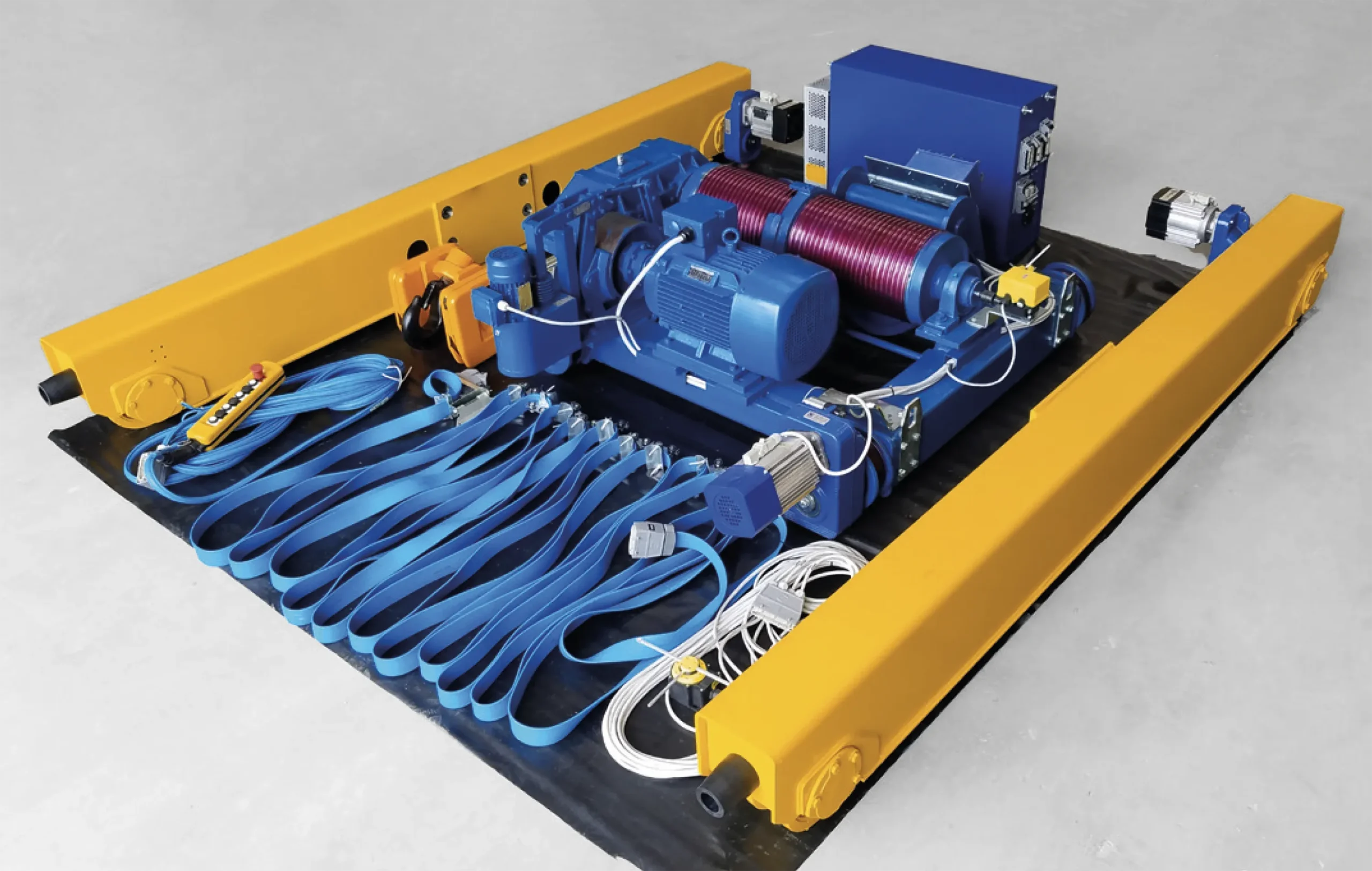
Relying on OMIS means choosing a partner who is a direct manufacturer, rather than just an importer. Every component – from the carpentry to the electrical panel – is fully designed, tested and manufactured at the group’s own facilities. This ensures complete control over the supply chain, customised design, high build quality, and components tested and certified in accordance with current regulations.
The Importance of scheduled maintenance
The safety of a workstation with lifting system does not end with the initial testing. Systems integrated into high-frequency production lines require regular inspections to maintain their original operating conditions and prevent unexpected failures. Through OMIS Service, we offer scheduled maintenance plans designed to optimise the life of the system and ensure total operator protection. The plans include scheduled maintenance, detailed service reports, and specialised support from experienced technicians who have an in-depth knowledge of every component.

FAQ - Frequently asked questions on workstation lightweight crane systems
- How to choose a crane for the workstation?
The choice depends on the area to cover and the type of handling. For single workstations or limited areas, the jib crane is the most practical solution. If it is necessary to cover large areas with linear movements or to connect several production stages, suspended systems, monorail cranes, or lightweight overhead cranes (GAE) are the solution of choice.
- What is the difference between a gantry crane and a bridge crane?
The industrial gantry crane is a self-supporting structure with legs that run on the ground on wheels or rails. On the other hand, the bridge crane runs on runways positioned at a height. The choice depends on the available space and whether or not a suitable supporting structure is available.
- What is the ideal capacity for an industrial workstation?
There is no such thing as a universal capacity: it all depends on the actual load being moved in the specific flow. At OMIS, configurations for lightweight systems start from 125 kg. The advice is always that sizing should be based on the average weights handled, not just on the theoretical maximum weight.
- Suspended system or jib crane: which to choose?
The suspended system is suitable for covering larger areas with Cartesian movements, optimising floor space and ensuring continuity between several workstations. The jib crane is preferable for individual workstations and circular operating range, with simplified installation on column, wall or mobile plinths, and low initial cost.
- How much space is needed to install a lightweight system?
It depends on the configuration. Self-supporting systems require space for fixing the columns to the ground. Suspended systems are anchored to brackets or the shed structure and do not take up floor space, making them ideal in already congested environments.
For over 55 years, we have been building lifting systems designed to last, optimise flows and ensure operational continuity. Each installation is the result of an in-depth technical analysis, carried out by technicians who not only design and build these systems every day, but also get to know them in their actual context of use: sector by sector, application by application, to always guarantee the most suitable solution for the specific needs of each customer.
Design your workstation with OMIS